North Atlantic Right Whale
Critically Endangered
With only approximately 370 individuals remaining, the North Atlantic Right Whale is one of the most endangered species on our planet. Human activities continue to threaten their survival as deaths outpace births in this magnificent species.
The Crisis
The North Atlantic Right Whale stands at the precipice of extinction. Once numbering in the thousands, commercial whaling in the 1800s brought them to the brink of extinction. Despite protection from whaling, their recovery has been hampered by new human-caused threats that continue to devastate the population.
Population Decline
The population faces a dire demographic crisis. Female right whales, once living up to 70 years, now only survive to around 45 years old due to human-caused mortality. The birth rate has plummeted, with females now calving every 6-10 years instead of the healthy 3-year interval.
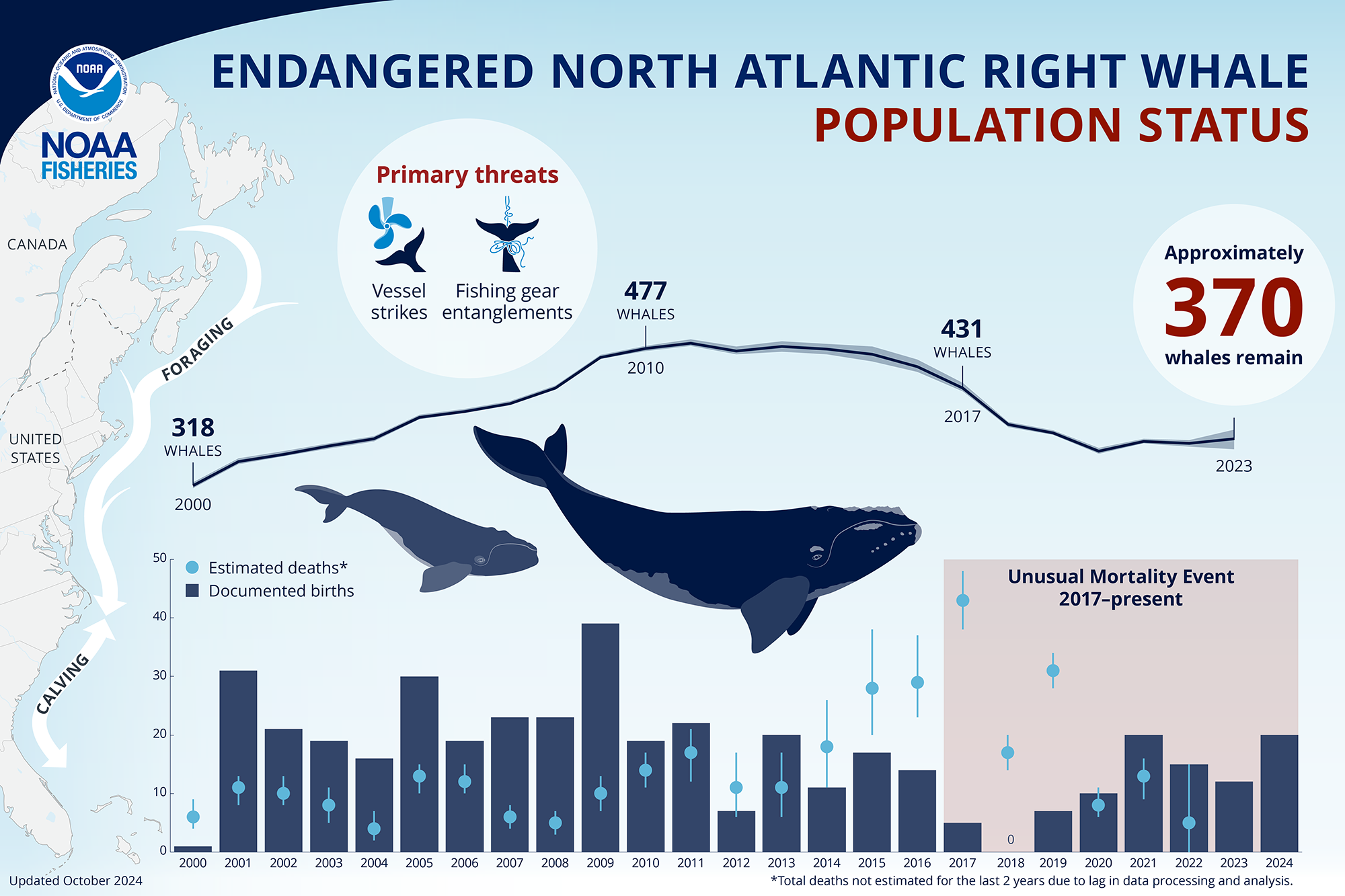
North Atlantic Right Whale population trends over time
Primary Threats
Two human activities account for the majority of right whale deaths: entanglement in fishing gear and vessel strikes. These threats are compounded by climate change, which forces whales into new areas with fewer protections.
Entanglement in Fishing Gear
Fishing gear cuts into whales' bodies, causing infections and preventing feeding. Entangled whales can drag gear for hundreds of miles over months or years, severely weakening them and sapping energy needed for reproduction.
The fishing industry's vertical lines that connect surface buoys to traps on the ocean floor create an invisible maze of death for whales. Even when gear is removed, the physical and psychological trauma often proves fatal.
directions_boat Vessel Strikes
Right whale habitat overlaps with major shipping lanes along the Atlantic coast. Ship collisions cause broken bones, massive internal injuries, and propeller cuts. The faster a vessel travels, the more likely it is to cause serious injury or death to a whale.
Whales surface to breathe and are vulnerable when feeding near the surface. Their massive size means they cannot quickly change direction to avoid an oncoming vessel, making prevention through early detection and speed reduction critical.
Climate Change: A Compounding Crisis
Warming oceans have forced right whales to change their distribution patterns as their prey moves to new areas. This has led whales into regions with fewer protections from vessel strikes and entanglements, making an already dire situation even worse.
A Timeline of Crisis
Commercial whaling brings North Atlantic Right Whales to the brink of extinction
Listed as endangered under the Endangered Species Act
Unusual Mortality Event begins - deaths start outpacing births
Population drops to just 372 individuals with only ~70 reproductively active females
Every single whale death brings the species closer to extinction
How WhaleCast Helps Save Right Whales
WhaleCast directly addresses the vessel strike crisis by providing real-time risk forecasts to mariners. By predicting where whales are most likely to be encountered, we empower boaters to avoid high-risk areas and navigate more safely, reducing the chance of deadly collisions.
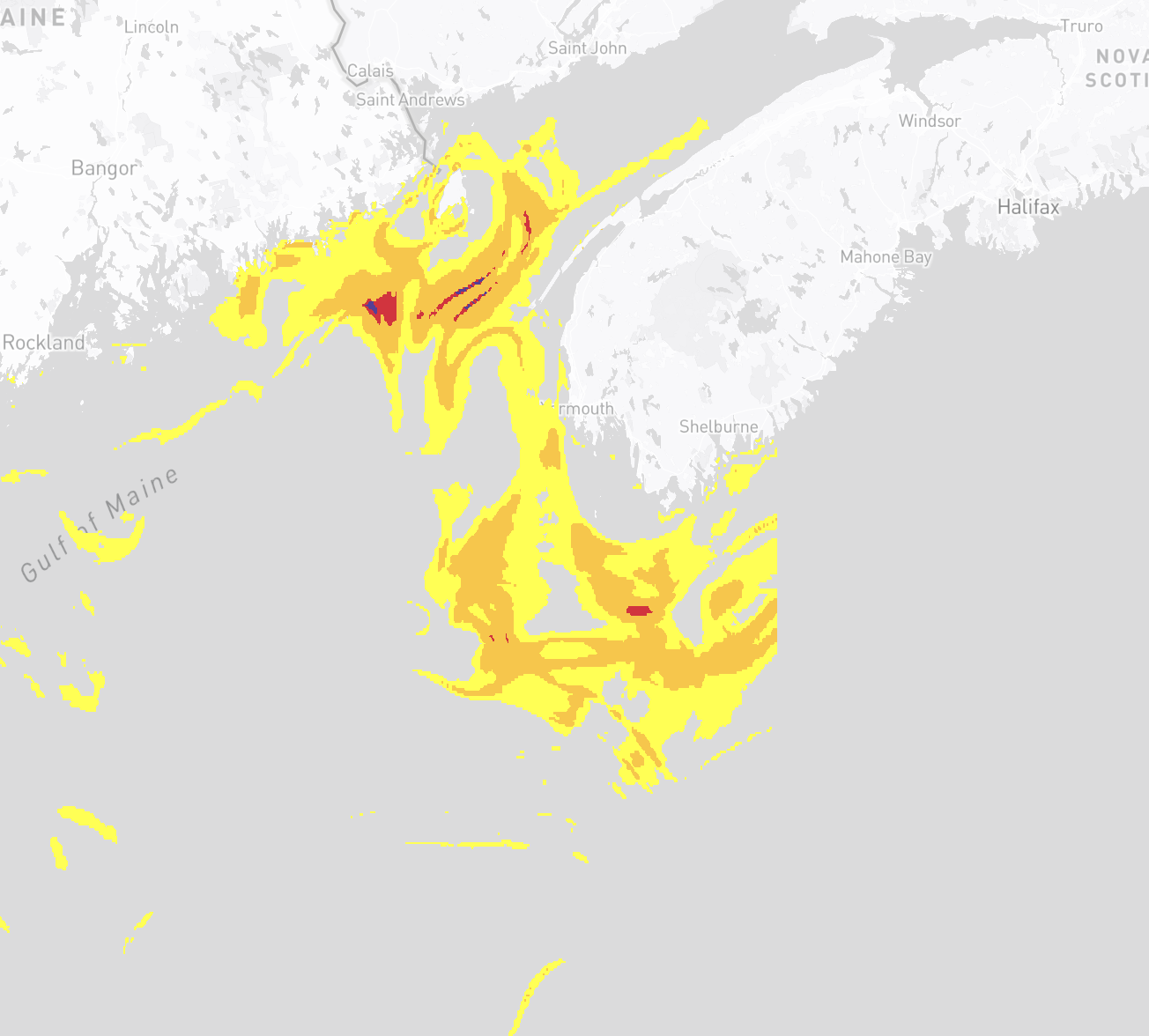
WhaleCast technology helping protect North Atlantic Right Whales from vessel strikes